PPC Advertising vs Organic Search: Key Differences
In the tech sector, where competition for attention is fierce and buying cycles can be long, visibility in search engines is not optional. Yet the two primary paths to that visibility—pay-per-click (PPC) advertising and organic search—serve fundamentally different purposes. Understanding where they diverge is essential for building a search strategy that balances immediate pipeline generation with long-term brand authority.
What Is PPC Advertising?
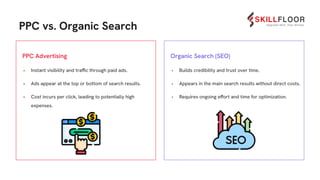
PPC advertising is a paid acquisition model in which advertisers bid for placement on search engine results pages (SERPs) and pay only when a user clicks their ad. Platforms such as Google Ads and Microsoft Advertising auction ad space in real time based on bid amount, ad relevance, and quality signals.
Key characteristics of PPC include:
- Immediate visibility — campaigns can go live and generate traffic within hours
- Precise targeting — keywords, geography, device, audience segments, and intent signals
- Full budget control — daily spend caps and bid adjustments at the campaign or keyword level
- Measurable ROI — conversion tracking ties spend directly to pipeline and revenue
What Is Organic Search?
Organic search refers to unpaid listings on SERPs, earned through search engine optimization (SEO). Ranking organically requires aligning page content, technical infrastructure, and authority signals with what search algorithms determine to be the most relevant answer to a query.
Key characteristics of organic search include:
- Compounding returns — a well-ranked page can generate traffic for years
- Credibility advantage — users generally trust organic results more than paid placements
- No per-click cost — investment is front-loaded into content and technical work
- Slower time to results — meaningful rankings typically take months to develop
Head-to-Head Comparison
The table below summarizes the core differences across the dimensions that matter most to technology marketers.
| Time to results | Immediate (hours to days) | Delayed (weeks to months) |
| Cost model | Pay per click; costs scale with traffic | Upfront investment in content and optimization |
| Traffic longevity | Stops when budget stops | Persists and compounds over time |
| Targeting precision | Granular: intent, audience, location, device | Limited to keyword and content relevance |
| User trust | Lower; users recognize paid placements | Higher; perceived as earned authority |
| Flexibility | High; messaging and spend adjustable in real time | Lower; changes take time to propagate |
| Scalability ceiling | Constrained by budget and auction competition | Constrained by ranking difficulty and content capacity |
Cost Dynamics: Spend Versus Investment
The financial distinction is more nuanced than “paid versus free.” PPC costs are variable and ongoing: the moment a campaign is paused, the traffic disappears. Organic search costs are front-loaded: content production, technical SEO, and link acquisition require sustained investment before returns materialize, but each successful page becomes a durable asset.
For technology companies, this often translates into a portfolio approach. PPC is well suited to high-intent commercial keywords—such as product-category searches and competitor comparisons—where the cost per acquisition can be justified against deal value. Organic search excels at informational and educational queries that build topical authority and nurture prospects earlier in the buying cycle.
Speed, Control, and Compounding Value
Three strategic differences deserve particular attention:
When to Prioritize Each Channel
Choose PPC When:
- You need qualified traffic and leads immediately
- You are launching a product or entering a new market
- You are targeting high-intent, bottom-of-funnel keywords
- You need rapid testing of messaging and offers
Choose Organic Search When:
- You are building long-term brand authority and topical relevance
- Your audience researches extensively before purchasing
- You want to reduce long-term customer acquisition costs
- You can commit to a sustained content and technical roadmap
The Verdict: Complementary, Not Competing
The most effective search strategies in the tech niche do not treat PPC and organic search as rivals. They treat them as a coordinated system: paid search captures demand and generates data—keyword performance, conversion rates, message resonance—that informs SEO priorities; organic search builds the authority and content depth that improves paid quality scores and lowers click costs over time.
Budget allocation should follow business stage and objective. Early-stage companies and product launches typically lean on PPC for velocity. Mature organizations with established content operations often shift weight toward organic to compound returns. In practice, the winning formula is measurement-driven: track incremental lift, attribution, and lifetime value across both channels, and rebalance continuously.
The key differences between PPC and organic search are real—in cost structure, speed, control, and durability. But the strategic conclusion is straightforward: use PPC to buy time and capture intent, and use organic search to earn trust and compound value. Together, they form a search presence that is greater than the sum of its parts.