
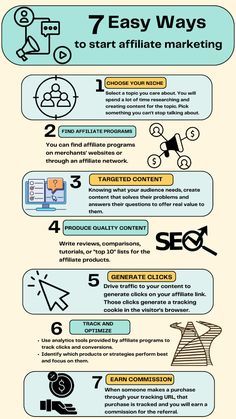
How to Start Affiliate Marketing as a Beginner: A Professional Roadmap
Affiliate marketing remains one of the most accessible entry points into digital revenue generation, particularly for those with an interest in technology. It rewards strategic thinking, content discipline, and analytical rigor rather than upfront capital. For beginners, however, the sheer volume of advice available online can obscure the fundamentals. This guide provides a structured, professional approach to launching an affiliate marketing practice from the ground up.
Understanding the Affiliate Marketing Model
Affiliate marketing is a performance-based arrangement in which a publisher (the affiliate) promotes a company’s products or services and earns a commission for each sale or action generated through a unique tracking link. The model creates alignment: merchants pay only for results, while affiliates are incentivized to produce high-quality, converting traffic.
Before committing to any strategy, beginners should internalize three core components:
- The merchant or network — the brand or platform that supplies products and tracking infrastructure.
- The affiliate — the publisher who creates content and drives qualified traffic.
- The audience — the readers or viewers whose trust ultimately determines success.
Success in this discipline is rarely about volume of links. It is about relevance, credibility, and measurable conversion performance.
Step 1: Select a Profitable Niche
Niche selection is the single most consequential decision a beginner will make. The technology sector offers substantial opportunity, but it is also competitive. Rather than targeting broad categories such as “software,” narrow the focus to a specific audience and problem set.
Criteria for Niche Evaluation
- Commercial intent — Does the audience actively research and purchase products?
- Commission structure — Are payouts sustainable relative to content effort?
- Competition density — Can a new publisher realistically earn visibility?
- Personal expertise — Can you produce authoritative content consistently?
Examples of viable technology sub-niches include cybersecurity tools for small businesses, developer productivity software, home networking equipment, and customer relationship management platforms for freelancers.
Step 2: Choose an Affiliate Network
Affiliate networks function as intermediaries between publishers and merchants. They handle tracking, payment processing, and compliance. Beginners should prioritize networks with transparent terms, reliable reporting, and reasonable approval thresholds.
| Large multi-merchant networks | Broad product coverage and established tracking | 1%–20% |
| Software and SaaS programs | Recurring subscription revenue | 20%–40% recurring |
| In-house merchant programs | Direct relationships and higher payouts | Varies widely |
| Digital course and info-product platforms | High-ticket commissions | 30%–50% |
Apply to a small number of programs initially. A focused portfolio of three to five well-matched offers outperforms a scattered list of dozens.
Step 3: Build a Conversion-Oriented Platform
Affiliates require a owned digital asset to capture and convert traffic. For most beginners, this means a website or a niche newsletter. Social platforms can supplement distribution, but rented audiences carry platform risk.
Essential Elements of an Affiliate Site
Step 4: Produce Content That Earns Trust
In the technology niche, credibility is the primary currency. Readers can detect superficial recommendations quickly, and search engines increasingly reward demonstrable expertise. Content should reflect genuine testing, clear reasoning, and balanced assessments.
The strongest affiliate content formats typically include:
- Comparative reviews — evaluating competing tools against defined criteria.
- Buying guides — matching products to specific user needs and budgets.
- Tutorials and walkthroughs — demonstrating practical use cases with affiliate links placed contextually.
- Case studies — documenting real outcomes with measured results.
Placement matters as much as production. Links should appear where reader intent is highest, such as within recommendation sections or after a demonstrated use case, rather than interrupting the narrative.
Step 5: Drive Qualified Traffic
Traffic without intent generates clicks but not commissions. Beginners should prioritize channels that attract research-stage and purchase-ready audiences.
Primary Acquisition Channels
- Search engine optimization — targeted long-tail keywords with commercial intent.
- Email marketing — a owned list that compounds in value over time.
- YouTube and video search — product demonstrations and comparisons.
- Niche communities — participation in forums and professional groups where genuine expertise is valued.
Paid traffic can accelerate learning, but beginners should validate conversion economics organically before allocating budget.
Step 6: Measure, Optimize, and Scale
Affiliate marketing is an iterative discipline. Establish baseline metrics and review performance on a consistent cadence.
| Click-through rate | Relevance of link placement and content appeal |
| Conversion rate | Effectiveness of the offer and audience match |
| Earnings per click | Overall monetization efficiency |
| Content ROI | Which pages justify continued investment |
Double down on the pages and offers that convert. Prune or revise underperformers. Over time, this disciplined cycle produces compounding results.
Common Beginner Mistakes to Avoid
- Promoting too many products — dilutes authority and confuses the audience.
- Neglecting disclosure requirements — creates legal and reputational risk.
- Chasing commissions over relevance — erodes reader trust and long-term revenue.
- Ignoring analytics — prevents informed optimization decisions.
- Expecting immediate results — sustainable affiliate income typically requires months of consistent effort.
Conclusion
Starting affiliate marketing as a beginner is fundamentally a matter of disciplined execution. Select a defensible niche, partner with reputable networks, build an owned platform, publish credible content, and optimize based on measured data. The technology sector rewards affiliates who function as genuine advisors rather than mere link distributors. Those who commit to that standard will find affiliate marketing to be a durable and scalable source of revenue.